The modern world of blistering development in the sphere of artificial intelligence can leave people lost when they have to select an AI assistant that would suit their needs. With top-tier players like ChatGPT vs. Gemini vs. Claude competing for the crown, how do you know which one is the best for you? Are you a developer, a content creator, or do you just want to find a powerful digital assistant? This comparison will help you realize the main differences and the key features of the AI tools.
All these assistants have their own abilities, advantages, and disadvantages. Let’s dive deep into what makes ChatGPT vs. Gemini vs. Claude stand out in the crowded AI field.
What is ChatGPT vs. Gemini vs. Claude?

When we talk about ChatGPT vs. Gemini vs. Claude, we are discussing three of the most advanced AI assistants currently available. They depend on various underpinning technologies and have particular features that interest specific areas of user demands.
- ChatGPT is powered by OpenAI’s GPT-4 model, known for its conversational abilities and diverse range of applications.
- Gemini, developed by Google DeepMind, brings cutting-edge AI technology that incorporates Google’s vast search and knowledge capabilities.
- Claude, from Anthropic, is a newer entry focused on safety, control, and ethical use of AI.
All these models would like to be the end-all AI assistant, but which model is going to work best for you is a matter of specific needs. So, what are their peculiarities and capabilities?.
ChatGPT (by OpenAI)
OpenAI’s ChatGPT is widely known for its versatility and conversational depth. The model has been improved greatly over the years, with various versions being released with the particular aim of increasing its accuracy of results, practicality, and overall performance.
- ChatGPT-3: It was the initial breakthrough version, launched in 2020, to create a natural flow of the text with contextual matter.
- ChatGPT-3.5: The latter has an improved version that added new features, especially to handle more complex dialogues and context over extended conversations.
- ChatGPT-4: The latest and the most developed model, GPT-4 is characterized by high levels of understanding and capacity to produce high-quality text in any format. It is particularly capable of interpreting not-so-simple queries and generating more precise, pertinent responses.
- ChatGPT-4 Turbo: This is a variation of GPT-4. 4 Turbo will be faster and cheaper to operate without suffering a performance penalty. It is the best solution for the user who has to work fast without sacrificing the quality of answers.
Strengths:
- Excellent at handling a wide range of tasks like writing, coding, and generating ideas.
- Highly customizable via API integrations, making it suitable for a broad audience.
Limitations:
- Sometimes generates hallucinated answers (incorrect or fabricated information).
- Occasional issues with maintaining a consistent tone.
2. Gemini (by Google DeepMind)

Gemini is Google DeepMind’s advanced AI model, which includes a suite of multimodal capabilities, allowing it to not only handle text but also images. It is a newer player in the field compared to OpenAI’s ChatGPT but has already made a significant impact due to its integration with Google’s search infrastructure.
- Gemini 1: The initial one in the Gemini line designed to be AI-based and perform mostly the text-based tasks with groundbreaking capabilities.
- Gemini 1.5: An improved form, with enhanced natural language processing, treating the context more effectively, and improved multimodal work, processing both text and pictures.
Strengths:
- Robust search capabilities, pulling the latest, most accurate information from the web.
- Powerful multimodal functionality allows it to handle not just text but images, making it more versatile for certain use cases.
Limitations:
- Privacy concerns due to its deep ties to Google’s data collection practices.
- Complex interface that may require users to learn how to use it effectively.
3. Claude (by Anthropic)
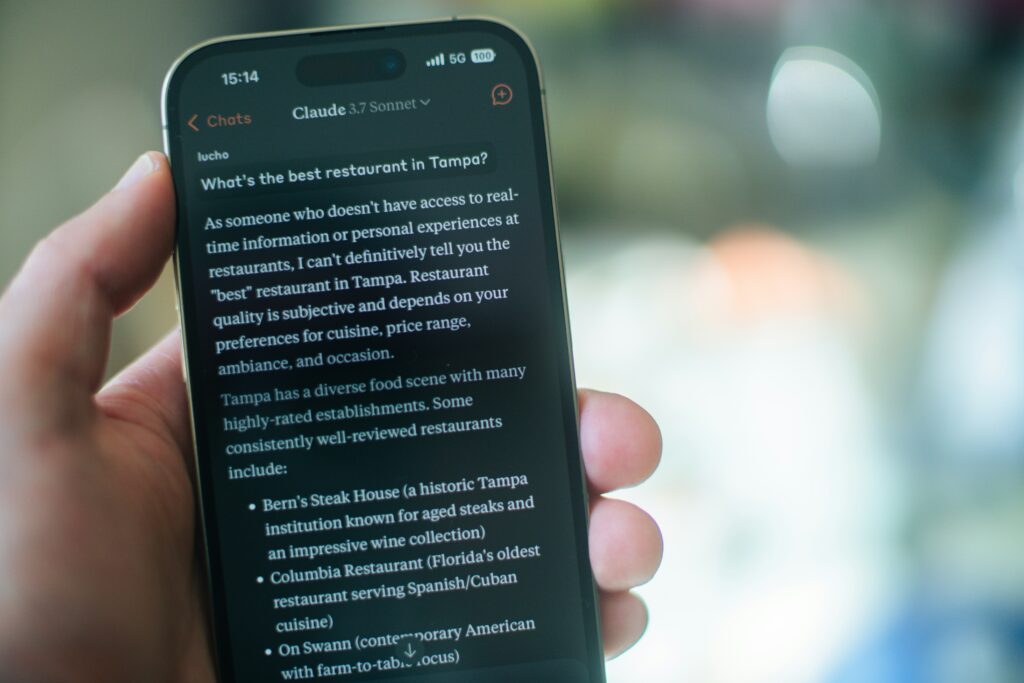
Anthropic Claude has some other focus than the other two models of the AI. Its conversational skills are good, but its primary focus is on AI safety, ethical aspects, and giving outputs that are understandable and transparent.
- Claude 1: The initial version, which started paying attention to how safe the use of AI could become, made sure that the ethical principles were placed on the top.
- Claude 2: A superior depiction that enhanced reading between the lines and generated some less harmful or prejudiced outputs.
- Claude 3: The most sophisticated one, with more control, customization, and fine-tuning to ensure user safety while still maintaining high levels of conversational features.
Strengths:
- Focus on safety and ethical AI usage, making it ideal for businesses or organizations with strict guidelines.
- Transparency in decision-making, ensuring users understand how and why it provides certain responses.
Limitations:
- More conservative in generating creative or complex outputs.
- Slower responses due to the emphasis on ethical safeguards and careful responses.
Comparing ChatGPT vs. Gemini vs. Claude for Your Needs
As we have described all the most prominent capabilities of the presented AI assistants, it is time to compare them according to your particular use case.
For Creative Professionals: ChatGPT
ChatGPT will be of use to you in case you are a writer, marketer, or a content producer as your most suitable assistant that will assist you with brainstorming, writing, and editing. It is ideal in creative activities because of its capacity to come up with human-like texts and engage in deep conversations.
- Use Case: Generating content, brainstorming ideas, editing drafts, creating social media posts.
- Why Choose ChatGPT: Offers fast and reliable text generation with creative flexibility.
For Research and Knowledge Seekers: Gemini
emini could be your choice in case you care about correct and current information. It is coupled with the search facilities offered by Google so that you will have accurate answers and suggestions. It is also perfect to examine visual content, as it has multimodal functionality.
- Use Case: Searching for detailed information, summarizing research papers, personalized suggestions.
- Why Choose Gemini: Best for data-driven tasks and up-to-the-minute search results.
For Ethical and Safe AI Use: Claude
Claude is the assistant of choice in case the user has an interest in ethical AI applications or companies demanding a specific environment. It is also user-friendly in terms of security and openness, so it is an appropriate option in the areas where ethical principles are paramount.
- Use Case: Customer service, ethical decision-making, content moderation, and scenarios that require a safe environment.
- Why Choose Claude: Ideal for businesses and individuals who need an AI assistant that prioritizes ethical responses.
Conclusion: ChatGPT vs. Gemini vs. Claude
Choosing between ChatGPT vs. Gemini vs. Claude ultimately depends on your specific needs and priorities. ChatGPT works best on conversational and creative tasks, Gemini is useful on research and knowledge-based tasks and Claude is useful and safe with its ethical approach to AI.
FAQs:
How do ChatGPT vs. Gemini vs. Claude compare in terms of natural conversation?
ChatGPT generally leads in natural, human-like conversation, making it ideal for everyday chatting and informal tasks.
Which AI assistant is best for developers?
If you are a developer looking for flexibility and integration, ChatGPT offers robust API support for building applications.
Is “Claude” suitable for content moderation?
Yes, Claude is designed with safety and ethical considerations in mind, making it well-suited for content moderation tasks.